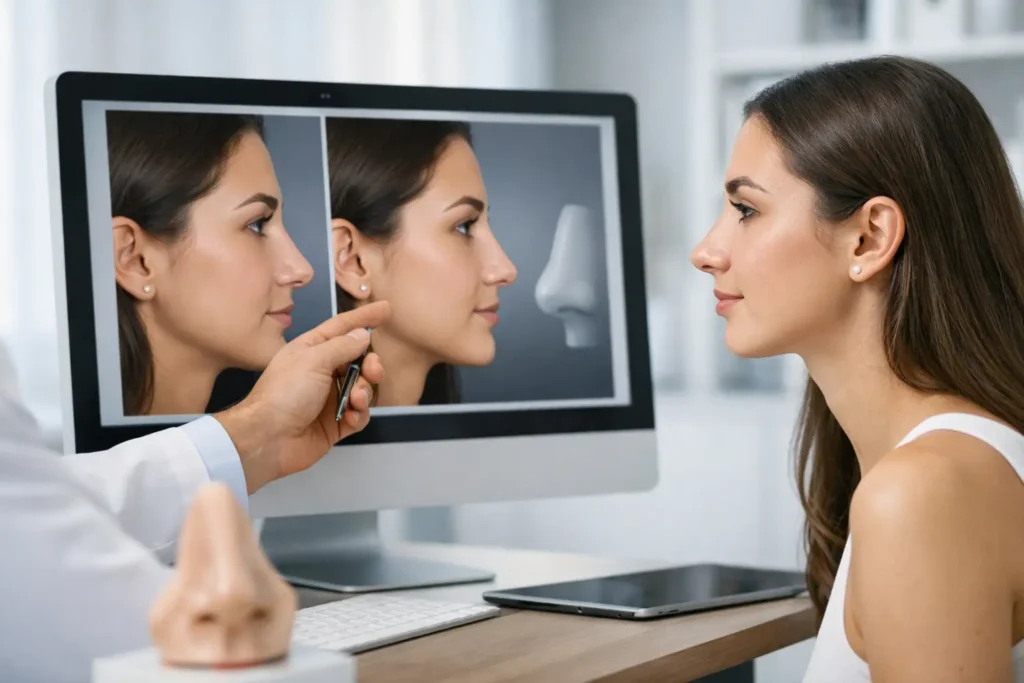
Swelling is one of the topics patients most often wonder about after rhinoplasty. In the first days after surgery, many people may notice that their nose looks larger, wider, or more swollen than expected. This is often a natural part of the healing process.
Swelling after rhinoplasty may vary depending on the scope of the procedure, skin structure, surgical technique, and the person’s healing characteristics.
The swelling seen especially in the first days is usually temporary, and time is needed before the true shape of the nose can be evaluated.
So when does swelling after rhinoplasty decrease? How should the first week, first month, and 6-month period be interpreted?
Why Does Swelling Occur After Rhinoplasty?
During rhinoplasty, bone, cartilage, and soft tissues are reshaped. After surgery, the body naturally starts the healing process.
During this process:
- Fluid may accumulate in the tissues
- Blood circulation may change
- The lymphatic system may temporarily slow down
- Tissues may enter the healing process
This can cause temporary swelling, especially on the nasal bridge and nasal tip.
Swelling is not seen in the same way in every patient.
Some people recover quickly within a few weeks, while in others the process may take longer.
First Week: The Period When Swelling Is Most Noticeable
The first week is usually the period when swelling is most intense.
Especially in the first 48-72 hours:
- Swelling around the nose
- Swelling around the eyes
- Mild bruising
- A feeling of fullness in the nose
may occur.
During this period, patients may worry that their nose looks too large, that the surgery has failed, or that the nose looks wider than before.
However, the appearance in this early period is not the final shape of the nose.

What Should Be Expected After the First 10-14 Days?
In the days after the splint is removed, visible reduction in swelling may begin.
During this process:
- The eye area may approach normal
- Swelling on the nasal bridge may decrease
- The face may begin to look more natural
However, the nasal tip often remains swollen for longer.
Swelling may feel more noticeable in the morning.
Its appearance can change during the day as circulation increases.
First Month: The Shape of the Nose Begins to Become Clearer
By the end of the first month, many patients return to social life more comfortably.
During this period:
- A significant part of the swelling may decrease
- The nose may begin to look slimmer
- Facial harmony may increase
- Comments from others may change
However, healing is still continuing.
Many people think they have reached the final appearance in the first month, but rhinoplasty recovery can take much longer.
The nose may look different, especially in photographs.
Between 3 and 6 Months: Fine Details Begin to Appear
The main change after rhinoplasty is often felt during this period.
Especially:
- Hardness in the nasal tip may decrease
- More natural contours may form
- Profile details may become clearer
- The nasal tip may start to look more refined
Patients may say that their nose looks different in the morning and evening.
This can be part of the normal healing process for many people.
Can There Still Be Swelling After 6 Months?
Yes.
This can be seen especially after:
- Thick-skinned noses
- Revision surgeries
- Cases with advanced reshaping
- Nasal tip procedures
In some people, months may pass before swelling fully resolves.
The golden rule is patience: the final result should not be judged too early.
Burun estetiğinde sabır iyileşmenin önemli bir parçasıdır.
Op. Dr. Ergün Kürün
Why Can Swelling Last Longer in Thick-Skinned Noses?
In people with thick skin, the skin can be heavier and the tissue settling process may progress more slowly.
For this reason:
- The nasal tip may remain swollen longer
- Fine details may appear later
- The final appearance may form later
In thick-skinned patients, recovery may sometimes continue for 12-18 months.
This does not mean that the operation was unsuccessful.
What Can Be Done to Reduce Swelling After Rhinoplasty?
The surgeon’s recommendations always come first.
In general:
- Sleeping with the head elevated
- Avoiding heavy exercise in the first days
- Reducing excessive salt intake
- Staying away from smoking
- Attending regular check-ups
can support the healing process.
Personal recommendations may vary according to the surgical plan.
When Should You Be Concerned?
Small changes during recovery can be normal.
However:
- Sudden increasing swelling
- Severe pain
- Marked redness
- High fever
- Unexpected discharge
should be evaluated by a doctor.
Conclusion
Swelling after rhinoplasty does not follow a single timeline.
Noticeable swelling may be seen in the first weeks, significant improvement may occur in the first month, and especially in thick-skinned patients, it may take longer for the nose to settle completely.
Judging the healing process by looking in the mirror too early can often be misleading.
Early swelling and the final result after rhinoplasty are not the same thing. Because healing includes tissue remodeling, change may continue for months.
On which day is swelling most noticeable after rhinoplasty?
Swelling may reach its most noticeable level in the first 48-72 hours in many patients. After that, it may gradually begin to decrease.
Is it normal for the nose to look large after the splint is removed?
Yes. After the splint is removed, the nose may look wider or larger due to swelling. This is common in the early period.
Why does the nasal tip settle later than other areas?
Skin and soft tissue healing in the nasal tip area may progress more slowly. Therefore, swelling can remain there longer.
Why does recovery take longer in thick-skinned patients?
Thick skin can make swelling resolution and the appearance of fine details slower.
It has been 6 months and my nose is still firm. Is this normal?
Small changes during the day may occur due to circulation and fluid distribution during the healing period.
My nose is more swollen in the morning and looks different in the evening. Is this normal?
Firmness may persist during healing, especially in the nasal tip. Your surgeon’s follow-up is the best guide.