Is medical tourism for rhinoplasty in Turkey worth it for American patients? It’s a question that deserves a straight answer rather than vague reassurances. Rhinoplasty in the United States typically runs $12,000 to $16,000 in total out-of-pocket costs before anesthesia, facility fees, and follow-up bills are added. Turkish procedures are quoted at $3,000 to $5,500 all-inclusive. That pricing gap drives significant American interest in Turkey as a rhinoplasty destination, and it’s enough to make the question worth working through seriously.
The honest answer isn’t just “yes, it’s cheaper.” What actually matters is whether the savings hold up once you account for travel, time off work, and what happens if you need follow-up care from 6,000 miles away. This article works through the real cost math, what the safety data actually shows, how to verify a surgeon’s credentials, and what the aftercare logistics look like as an international patient. By the end, you’ll have a concrete checklist to evaluate any Turkish provider on its actual merits.
The true cost comparison: Turkey vs. the US side by side
Most Turkish clinics quote an all-inclusive price covering surgeon fees, the operating room, anesthesia, hospital stay, pre-op bloodwork, post-op medication, and local transfers. In the US, the surgeon fee alone typically lands between $8,000 and $12,000, with hospital and anesthesia billed entirely separately. Many patients don’t see the full number until itemized invoices arrive after surgery.
For a 10-day trip from New York or Los Angeles, budget an additional $800 to $1,500 for round-trip flights, more during peak summer months, plus $200 to $400 for accommodation beyond what the package covers, and roughly $100 to $300 for medications and incidentals. Even with travel fully layered in, the total out-of-pocket cost typically lands 60 to 70 percent below an equivalent US procedure, representing real savings of $6,000 to $10,000.
Adana-based clinics, including boutique surgical practices, generally price primary rhinoplasty between $3,000 and $4,000 all-inclusive. Istanbul packages run slightly higher at $3,500 to $5,200 due to surgeon demand and the concentration of premium facilities. The cost difference between cities becomes especially meaningful for revision cases, which can climb to $5,000 to $8,500 in either location depending on complexity.
Medical tourism for rhinoplasty in Turkey: what the safety data shows American patients
A PubMed analysis of 369 cosmetic rhinoplasties documented a 7.9% complication rate and a 10.8% revision rate among US procedures. The American Society of Plastic Surgeons estimates global revision rates between 8 and 15 percent for board-certified surgeons. These figures are the honest benchmark against which Turkish outcomes should be measured.
Reputable Turkish clinics report complication rates below 1% and revision rates under 1.2%, though these figures come from clinic-internal metrics rather than independent peer-reviewed registries. Estimates from medical tourism aggregators and clinic consortia, including Bookimed listings of top Turkish rhinoplasty clinics, put revision rates at 5 to 7 percent for high-volume Turkish surgeons who perform roughly three times the global average annual caseload. No direct comparative academic study yet exists between the two countries, so patients should weigh clinic-reported numbers accordingly.
Turkish rhinoplasty safety isn’t a country-wide standard; it’s provider-dependent. The same variation exists across US providers. A credentialed surgeon operating in a properly accredited facility in Turkey carries meaningfully different risk than a high-volume clinic with no verifiable standards, regardless of geography. The country of origin is the wrong variable to optimize for. Surgeon credentials, facility standards, and aftercare protocols are the right ones.
How to verify a surgeon’s credentials and clinic accreditation
American patients should confirm that the surgeon holds certification from the Turkish Board of Plastic Surgeons (TSPRAS) or the European Board of Plastic, Reconstructive and Aesthetic Surgery (EBOPRAS). Both credentials are verifiable through official professional directories. For a practical, step-by-step guide on selecting a clinician, see Choosing the Right Doctor for Rhinoplasty. Request the surgeon’s exact specialty title in writing, specifically “Plastic, Reconstructive, and Aesthetic Surgery”, and verify their legal registration name against those directories before engaging further.
For the facility, Joint Commission International (JCI) accreditation is the most recognized international hospital safety standard. Confirm that the specific hospital where your surgery will be performed holds a current certificate. This distinction matters because some clinics reference a partnered hospital’s accreditation in their marketing without actually performing surgery there. Ask for the JCI certificate number and verify it directly on the Joint Commission International website. Resources that explain how to verify a surgeon’s credentials in Turkey can help you cross-check claims before you commit.
Additional credibility markers worth checking include:
- Membership in the International Society of Aesthetic Plastic Surgery (ISAPS), verifiable through the ISAPS member directory
- An official Turkish health tourism license authorizing the clinic to treat international patients
- Written confirmation of the anesthesiologist’s credentials and residency training, not just their presence on the day of surgery
Red flags that should stop you before you book: credentials listed without a verifiable directory trail, vague responses when you ask which board certified the surgeon, and packages that describe “board-certified” without specifying which board. These aren’t minor gaps. They’re reasons to ask direct follow-up questions before any money changes hands.
Post-op logistics, package terms, and what to confirm in writing
A legitimate medical tourism rhinoplasty package covers surgery, hospital stay (typically one to two nights), anesthesia, pre-op tests, post-op medications, nursing care, airport transfers, local clinic transport, and interpreter services. Most reputable clinics include five to seven nights of recovery accommodation, a structure that supports the minimum 7 to 10-day stay that surgeons broadly recommend before patients are cleared to fly home.
The more consequential gaps are what most patients forget to ask about before they travel. International airfare, travel insurance, companion lodging, ICU care if needed, advanced imaging such as MRI or CT, and follow-up care beyond the initial stay are almost always excluded from the quoted package price. Before you travel, confirm in writing: the exact number of inpatient nights included, the nightly overage rate if your stay extends, the revision and complication policy, and whether medical records will be issued in English for continuity of care at home. For a concise overview of what is typically included in a medical tourism package, consult a medical tourism provider’s breakdown before you sign anything.
The most important question to ask is what happens after you land back in the US. A reputable provider defines escalation pathways in writing, offers remote follow-up at set time points, typically week one, week two, month one, and month three, and maintains contact through the full healing timeline. Complications such as infection, breathing obstruction, tip asymmetry, and septal issues often emerge weeks after surgery, when you’re already home. A clinic that can’t describe its written complication protocol for patients after departure is a clinic that hasn’t thought through patient safety beyond the week you spend in their city.
What a properly vetted rhinoplasty clinic experience in Turkey looks like
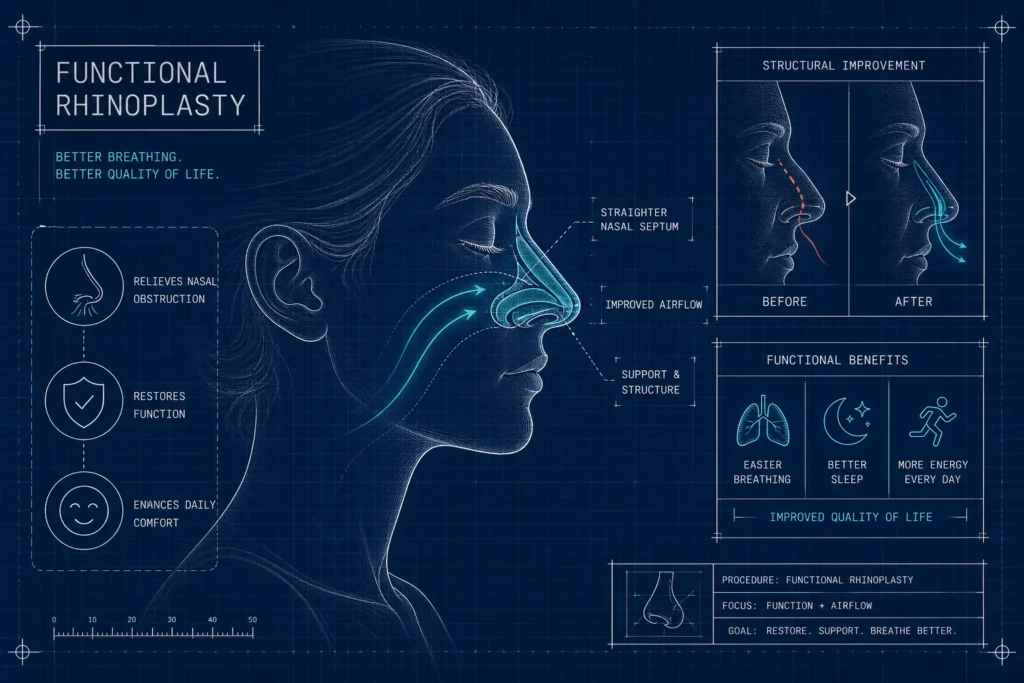
For American patients trying to picture what a properly credentialed, boutique rhinoplasty experience in Turkey looks like in practice, Op. Dr. Ergün Kürün’s clinic in Adana is a concrete example of what that standard looks like. Dr. Kürün is an ENT specialist with over 25 years of surgical experience, which means every procedure addresses both aesthetics and nasal function simultaneously. Patients presenting with a deviated septum, turbinate hypertrophy, or a nasal valve issue don’t need two separate surgeries or two separate recoveries. The functional and cosmetic work are planned and executed together.
The clinic uses golden ratio facial analysis and digital pre-surgical planning to map out the expected result before any incision is made. Reviewing the planned outcome during consultation sets realistic expectations and reduces the guesswork that leads to dissatisfaction later. English-language consultations and teleconsultation options are available before any commitment to travel, so the decision-making process can start from home.
Most patients who follow the clinic’s structured recovery protocol return to public-facing activities within 7 to 10 days, a timeline that matters directly for trip planning. It defines the minimum realistic stay: surgery, one hospital night, hotel recovery through splint removal around day seven, and fit-to-fly clearance for the return home. Initial consultations include an endoscopic nasal function evaluation, giving American patients a clinically grounded starting point rather than a sales call.
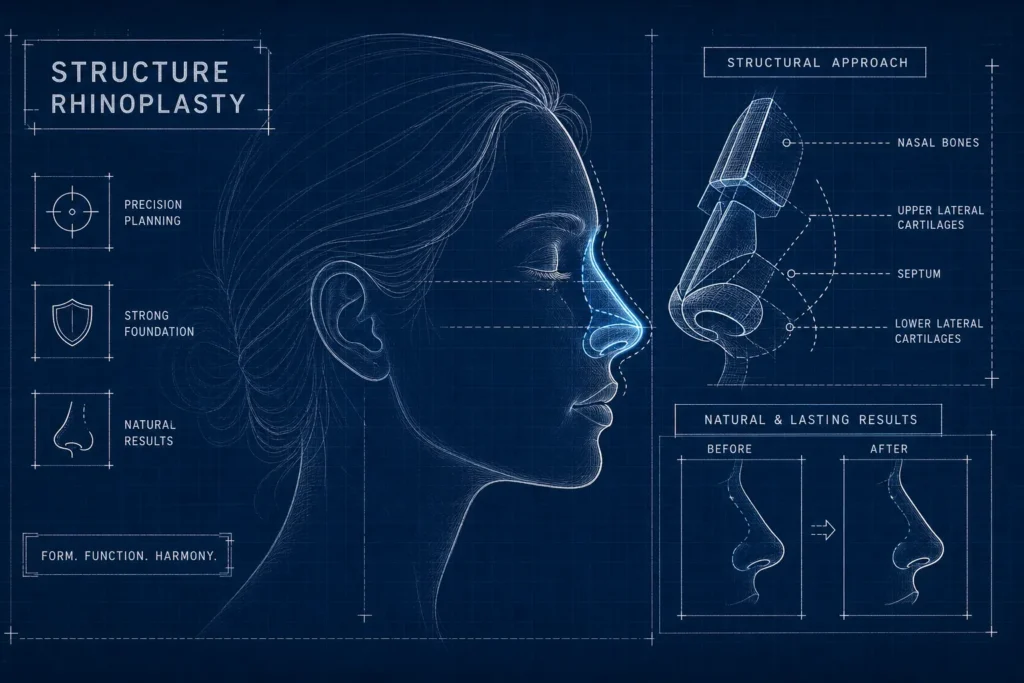
Advanced techniques including Preservation Rhinoplasty, Structure Rhinoplasty, and Ultrasonic (Piezo) Rhinoplasty are applied based on each patient’s individual anatomy rather than offered as menu options. That clinical specificity is what separates a boutique surgical practice from a high-volume clinic running the same approach on every patient.
An honest verdict: is medical tourism for rhinoplasty in Turkey worth it for American patients?
Medical tourism for rhinoplasty in Turkey is worth it for the right American patient with the right provider. The cost savings are real, $6,000 to $10,000 below US pricing even after travel expenses are factored in. The safety profile is credible when the surgeon is properly credentialed, the facility is accredited, and the aftercare plan is documented in writing before you leave home.
The risk concentrates in one place: choosing based on price alone. Skipping credential verification, booking a clinic that offers vague complication policies, or selecting a provider with no written protocol for managing post-departure complications are the decisions that produce bad outcomes. Those outcomes have nothing to do with Turkey as a country and everything to do with due diligence as a patient.
Use this checklist before booking any Turkish rhinoplasty provider:
- Verify TSPRAS or EBOPRAS board certification through an official directory
- Confirm JCI accreditation for the specific hospital where surgery will occur
- Obtain the anesthesiologist’s credentials in writing
- Review what the package explicitly excludes
- Get the revision and complication policy in writing, including the post-departure protocol
- Confirm that medical records will be issued in English upon discharge
For a short preparatory checklist you can print and take to initial consultations, see 11 important questions to ask before rhinoplasty.
Rhinoplasty in Turkey isn’t a gamble when you approach it as an informed patient. It’s a medical decision that deserves the same scrutiny you’d apply to any US-based surgeon, and for patients who do that work, the combination of real savings and genuine surgical expertise at credentialed providers makes the answer clear. The effort goes into finding the right provider, not into deciding whether the country qualifies.