Although rhinoplasty may appear to be a simple change in shape when viewed from the outside, it is, at its core, an engineering marvel that preserves respiratory physiology and restores the biomechanical balance of the face. In modern surgery, success lies not merely in reducing the size of the nose, but in managing variables such as the patient’s skin thickness, cartilage memory, and respiratory capacity.
Clinical Approach to Rhinoplasty: What It Is and What It Isn’t?
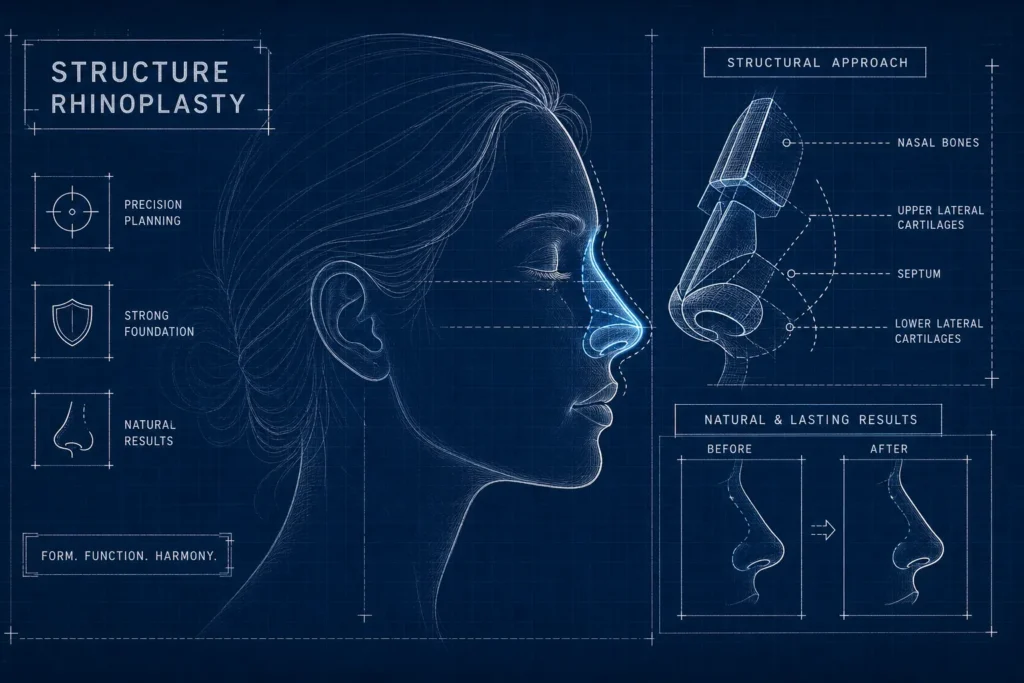
Rhinoplasty is the reconstruction of the bone and cartilage structures of the nose. However, every adjustment affects the nose’s static and dynamic balance. As Dr. Ergün Kürün, the Hybrid Rhinoplasty approach we employ at our clinic combines two main philosophies:
Structural Support: We use cartilage grafts to reinforce the internal framework of the nose, thereby eliminating the risk of the tip drooping or collapsing over the long term.
Preservation (Conservative) Aesthetics: By preserving the ligaments and soft tissues on the bridge of the nose, we aim for a “non-surgical” profile without disrupting the natural anatomical contours.
Ideal Candidate Profile: Who Is a Good Candidate for Rhinoplasty?
An ideal candidate for rhinoplasty should meet the following criteria:
Physiological Maturity: Individuals aged 17 and older for females and 18 and older for males, at which point the growth plates of the skeletal system have closed.
Anatomical Indications: Individuals with structural deformities such as a nasal hump, wide nostrils, a drooping nasal tip, or a deviated nasal axis (asymmetry).
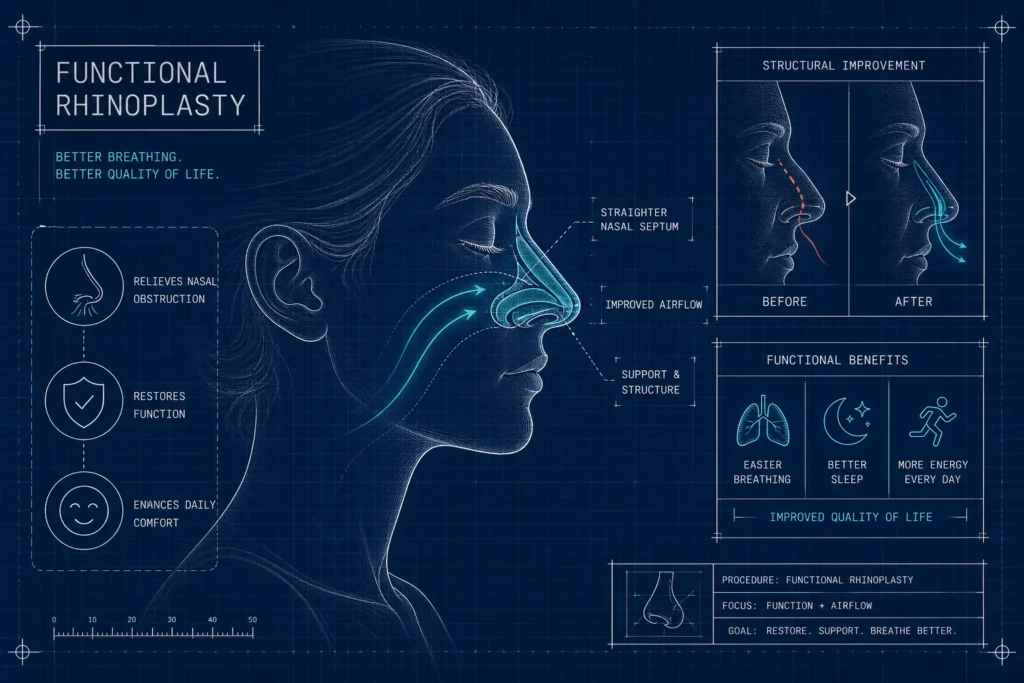
Functional Requirements: Patients suffering from chronic shortness of breath due to a deviated septum or turbinate hypertrophy (enlarged turbinates).
Psychological Stability: Individuals who understand the social and physical limitations of the surgery and seek a result that is “natural and in harmony with their face” rather than “perfect.”

Medical Ethics: Who Is Not a Candidate for Rhinoplasty?
Rhinoplasty is not medically or ethically recommended in the following cases:
1. Body Dysmorphic Disorder (BDD)
It is a condition in which a patient is obsessively focused on a very minor or imaginary flaw in their physical appearance. Patients with this psychological condition are not suitable candidates for surgery because they will never be satisfied, no matter how perfect the surgical outcome may be.
2. Advanced Systemic Diseases and Coagulation Disorders
Uncontrolled diabetes, severe hypertension, or bleeding disorders (such as hemophilia) can make the risks of surgery life-threatening.
3. Active Nicotine Addiction
Smoking impairs microcirculation, thereby hindering tissue perfusion. This condition carries a risk of severe tissue necrosis (tissue death) and infection, particularly in revision cases and in noses with thick skin.
4. Expectations That Push the Limits of Medicine
Particularly in cases of thick-skinned (African American/Middle Eastern) or extremely thin-skinned noses, the skin’s ability to conceal the bony and cartilaginous framework is limited. Requests for radical changes that the skin cannot accommodate should be rejected on surgical grounds.
Maximum Precision with Ultrasonic Piezo Technology
At our clinic in Seyhan, Adana, our expertise stems not only from our experience but also from the advanced technology we use. Ultrasonic Piezo Surgeryallows us to reshape bones using sound waves without breaking them, reducing soft tissue trauma to near-zero levels. This minimizes swelling and bruising during the healing process, enabling patients to return to their social lives quickly.
Conclusion: The Surgeon’s Vision and Patient Trust
Rhinoplasty is not a “custom order” but a process of “compromise.” A successful surgeon is someone who honestly communicates not only what the patient wants, but also what the patient needs and what the patient’s anatomy allows. With 30 years of experience, we manage every procedure with this transparency and scientific rigor.