Can rhinoplasty fix a deviated septum and improve appearance at the same time? Many patients walk into a consultation carrying what they believe are two separate problems. One is medical: a deviated septum causing years of congested breathing, interrupted sleep, and chronic nasal pressure. The other is cosmetic: a crooked nose or asymmetry that has bothered them just as long. Their assumption is that fixing one means scheduling two surgeries, surviving two recoveries, and paying two sets of bills. That assumption is wrong.
Septorhinoplasty addresses both goals in a single procedure because the anatomy is shared. The same cartilage and bone structures that determine how your nose breathes also determine how it looks. A surgeon who understands that connection can correct your airway and reshape your nose at once, producing outcomes that are more complete and more durable than either procedure could achieve alone. This type of surgery demands genuine ENT expertise and rhinoplasty skill working together from the first incision, not one discipline bolted onto the other as an afterthought.
At Dr. Ergün Kürün’s clinic in Adana, Turkey, Op. Dr. Ergün Kürün, Rinoplasti & Burun Estetiği Kliniği, the clinic reports that every septorhinoplasty evaluation begins with endoscopic nasal function assessment before any cosmetic planning starts. That sequencing matters. By the end of this article, you’ll know whether a combined approach fits your situation, what outcomes to realistically expect, how recovery unfolds week by week, and the exact questions to ask any surgeon you consult.
Can Rhinoplasty Fix a Deviated Septum? What Septorhinoplasty Actually Does
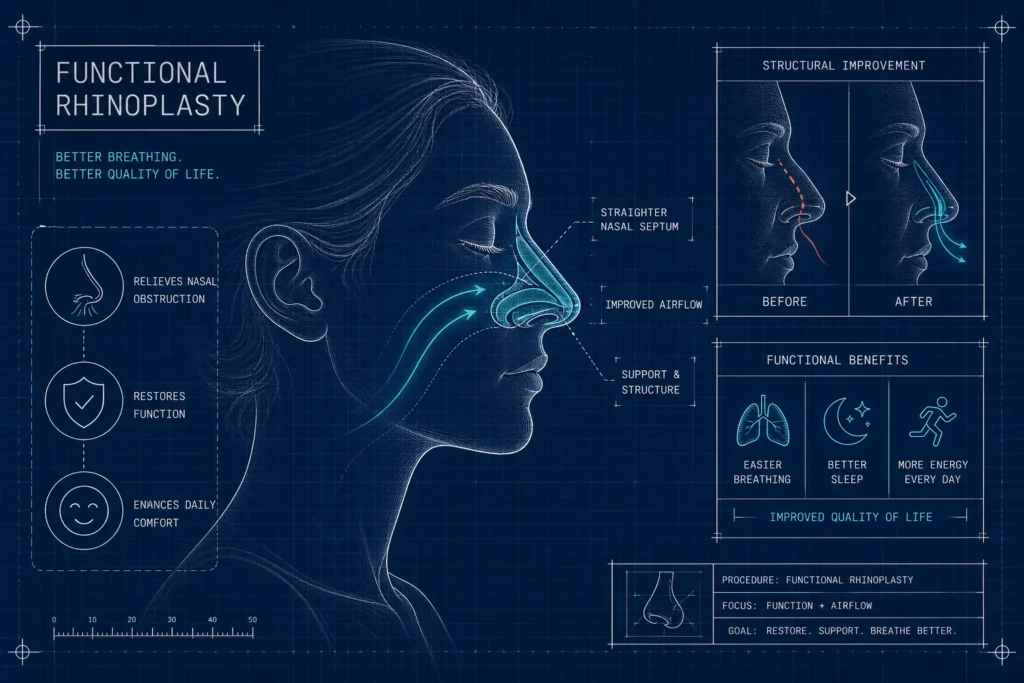
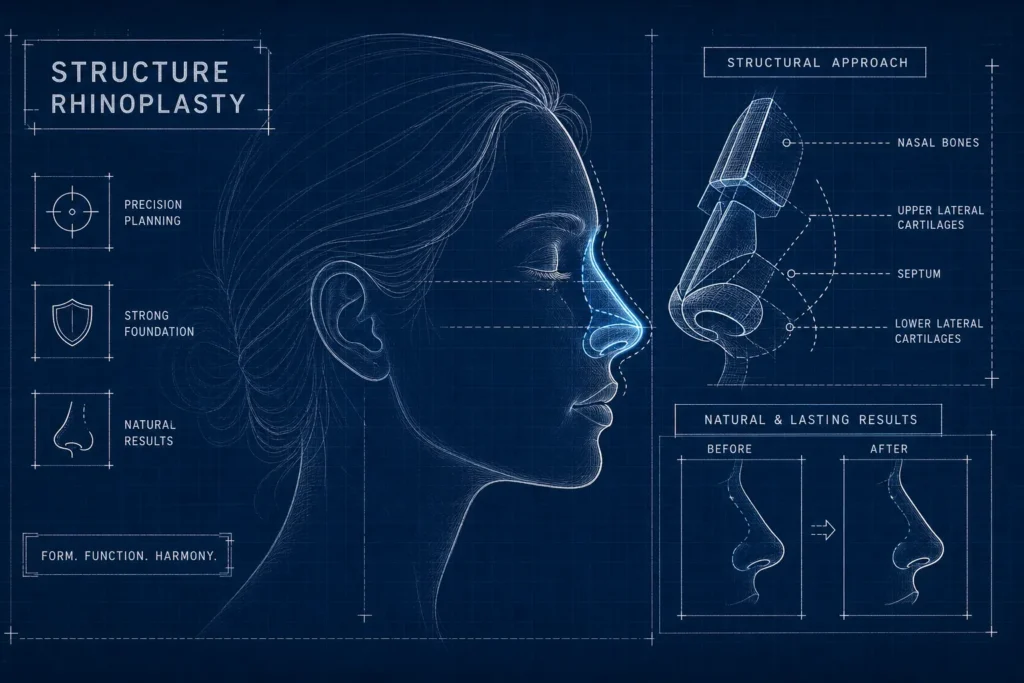
The septum is the internal wall that divides your nostrils into two airway channels. The external nose, including the bridge, tip, and sidewalls, is built from the same pool of cartilage and bone. When a surgeon opens the nose to straighten the septum, they are already working inside the very structures that define the nose’s external shape. This anatomical overlap is why combining both procedures is logical, not redundant.
A caudal septal deviation, a deviation at the front of the nose near the tip, pushes outward against the nasal wall. That physical displacement causes breathing obstruction at the nasal valve and also makes the nose look crooked from the outside. Correcting it requires repositioning structures that affect both the airway and the appearance simultaneously. Treating one without the other leaves the problem half-solved.
The practical case for combining procedures is equally compelling. One anesthesia event, one recovery period, one set of post-operative appointments. Beyond convenience, the outcomes data supports this approach: isolated septoplasty carries a failure and revision rate of 15 to 57%, partly because treating airway obstruction without addressing underlying structural support often leaves problems unresolved. Peer-reviewed comparative trials have found up to a 56% improvement in NOSE symptom scores for septoplasty combined with turbinoplasty, versus roughly 11% for septoplasty performed alone, a meaningful gap that reflects how incomplete correction of the airway leads to incomplete relief. Combined septorhinoplasty produces more complete and lasting results because function and structure reinforce each other. For clinicians and patients who want a more detailed clinical review of septoplasty and septorhinoplasty anatomy and indications, see this comprehensive review on the National Library of Medicine site: clinical review of septoplasty and septorhinoplasty.
An ENT specialist approaching rhinoplasty treats the nose as a breathing organ first. According to the clinic, Dr. Ergün Kürün’s ENT surgical background means airway evaluation precedes cosmetic planning in every case, the integrated thinking that septorhinoplasty requires to succeed.
Septoplasty Alone or Septorhinoplasty: How to Know Which One You Need
Not every deviated septum requires a combined procedure. When the deviation sits in the posterior or inferior regions of the septum, deeper inside the nose toward the back, it narrows the airway without affecting the external nasal framework or the nasal valve. If your nose looks straight and only your breathing is impaired, standalone septoplasty is often sufficient. Clinical indicators for that scenario include no visible external asymmetry, no nasal valve involvement, and no history of significant nasal trauma.
A combined approach becomes necessary under specific conditions. Caudal (anterior) deviations that press against the nasal valve and alter external appearance require septorhinoplasty. So do high dorsal deviations involving the internal nasal valve, collapsed or stenosed nasal valves, and any case where the external nose is visibly crooked, asymmetric, or structurally deformed from trauma. If your septum pushes outward and makes your nose look off-center, septoplasty alone won’t straighten the appearance, and it won’t fully resolve the breathing obstruction either, because the valve remains compromised.
Before you consult a surgeon, run through these questions to clarify your situation. Do you have visible asymmetry or a crooked bridge when you look straight ahead in a mirror? Does one nostril partially collapse when you breathe in sharply through your nose? Have you had nasal trauma from an injury or accident? Does your breathing worsen significantly when you lie on your back? These aren’t diagnostic tools, but they frame the conversation with your surgeon and help you understand which anatomy is likely involved.
Septorhinoplasty for Function and Form: What Results Actually Look Like
Most patients notice meaningful breathing improvement once internal splints are removed at 7 to 10 days post-surgery. Full improvement continues through the first month as internal tissue settles and swelling reduces. The functional gains from septorhinoplasty are more complete than those from septoplasty alone, precisely because the procedure addresses both the deviation and the structural support that keeps the airway open over time. Patient-facing resources on septorhinoplasty outline the typical post-op course and expectations in similar terms, including splint and splint removal timing: patient procedures and recovery details for septorhinoplasty.
Cosmetic results depend heavily on technique. Structure Rhinoplasty, which relies on cartilage grafting and advanced suture methods, is associated with tip stability and natural contour that hold over time. Preservation Rhinoplasty, which spares tissue rather than removing it, is associated with faster recovery and a reduced risk of over-operated results. The clinic states that Dr. Kürün uses digital pre-surgical planning with golden ratio facial analysis before any incision is made, calibrating the cosmetic outcome to each patient’s specific facial proportions rather than a generic aesthetic standard. Recent literature comparing rhinoplasty techniques and outcomes can provide further reading for patients considering preservation versus structure-based approaches: study on rhinoplasty techniques and outcomes.
Honesty about risks matters here. Bleeding, infection, septal perforation, temporary numbness, and continued obstruction are among the most common complications. Revision surgery is possible, most often when a caudal deviation or nasal valve issue was incompletely addressed in the initial procedure (read about 9 early signs that may indicate the need for revision rhinoplasty). Combined septorhinoplasty carries a lower long-term revision rate than isolated septoplasty because it resolves the full structural problem rather than a partial one. Your best protection against revision is a surgeon with clear ENT and rhinoplasty expertise who evaluates airway function before planning any cosmetic element.
The Septorhinoplasty Recovery Timeline, Week by Week
Swelling and bruising peak at 48 to 72 hours after surgery. The nose will feel completely blocked during this phase, and that is expected. Internal splints, tissue swelling, and post-surgical packing are the cause, not a sign that something is wrong. Discomfort during this period is typically described as sinus pressure rated around 3 to 4 out of 10, not sharp pain. Blood-tinged drainage is normal and usually stops within 24 to 72 hours.
External splints come off at 7 to 10 days. Most visible bruising fades enough by days 10 to 14 for patients to return to desk work and light social activity. The clinic uses a structured 7-day social recovery protocol designed to return patients to daily life as efficiently as possible, with clear post-op instructions for each phase of healing.
By the end of week four, 70 to 80% of swelling has resolved and breathing improvement is clearly noticeable as internal tissue continues to settle. Non-strenuous exercise resumes around days 10 to 14; full exercise clearance typically comes at 4 to 6 weeks. The nasal tip continues to refine for up to 12 months, and up to 18 months for patients with thicker skin. Early results at 6 weeks show substantial change, but final refinement commonly requires 9 to 12 months or more. Managing that expectation early prevents unnecessary concern during the remaining healing process. For clinicians and patients interested in objective, peer-reviewed postoperative outcome data and timelines, see this recent clinical analysis of septorhinoplasty outcomes: clinical study on septorhinoplasty recovery and outcomes.
Costs, Insurance Coverage, and the Questions to Ask Your Surgeon
In the United States, patient-reported totals for septorhinoplasty typically run $11,700 to $11,900, with a full range of $3,000 to $30,000 depending on case complexity and insurance coverage. Insurance covers the functional septoplasty portion when breathing impairment is documented as medically necessary, that requires a detailed clinical examination, a verified diagnosis, and prior authorization from the insurer. Even with coverage, copays, coinsurance, and deductibles still apply. Revision cases involving cartilage grafts from the rib or ear push out-of-pocket costs toward $15,000 to $30,000.
For patients paying entirely out of pocket, or those seeking revision work after a previous surgery, Turkey represents a 60 to 75% cost reduction for equivalent surgical quality. All-inclusive pricing in Turkey for septorhinoplasty typically runs $2,800 to $4,650, compared to $18,000 to $36,000 in total US costs when facility and anesthesia fees are included. When choosing a surgeon abroad, credentials matter most: specifically, an ENT specialist with formal rhinoplasty training and a documented track record in combined functional-aesthetic cases. For guidance on choosing an appropriate surgeon and vetting credentials, review resources like Choosing the Right Doctor for Rhinoplasty. Dr. Ergün Kürün’s profile addresses those criteria directly, with board certification in ENT and extensive nasal surgery experience. The clinic offers free initial consultations that include endoscopic nasal function evaluation, along with English-language support throughout the process.
Before you book any procedure, bring these questions to your surgeon consultation:
(For a concise checklist you can print and bring to appointments, see this short list of 11 important questions to ask before rhinoplasty.)
- Are you an ENT specialist, a plastic surgeon, or both, and how does that shape your approach to combined procedures?
- How many septorhinoplasty surgeries have you performed in the past year?
- Will you assess my nasal valve function endoscopically before planning the cosmetic component?
- What technique will you use for the cosmetic portion: Preservation, Structure, or Ultrasonic Piezo rhinoplasty?
- What does my specific deviation type mean for the surgical approach and likely outcome?
- What is your revision rate for combined procedures, and what is included in post-operative care?
Making the Right Decision Starts With the Right Evaluation
Yes, rhinoplasty can fix a deviated septum and improve your nose’s appearance in the same surgery. In most cases where both problems exist, combining them is the smarter clinical choice, and the more practical one for your life. A single recovery produces a nose that both functions and looks the way you want it to.
The decision starts with a proper evaluation, not a self-diagnosis based on symptoms. Seek a surgeon with genuine ENT and rhinoplasty integration, not a cosmetic surgeon who handles septums as an afterthought. Use the checklist above at every consultation to filter for real expertise.
If you want a personalized clinical picture from a surgeon with deep experience in exactly this combination of problems, Dr. Ergün Kürün offers a free initial consultation including endoscopic nasal function evaluation. That evaluation determines whether combined septorhinoplasty applies to your anatomy and what a realistic outcome looks like for your specific case.