How do I find a surgeon who specializes in ethnic rhinoplasty for Middle Eastern features? It’s one of the most specific searches a patient can run, and the answer isn’t simply “find a board-certified plastic surgeon.” Most surgeons can reshape a nose. Far fewer understand Middle Eastern facial architecture: the thick sebaceous skin, the prominent dorsal profile, the cultural weight of preserving identity while refining features. This guide gives you a concrete framework to vet candidates, analyze their work, and ask the questions that separate true ethnic rhinoplasty specialists from generalists who happen to have performed a few cases.
The stakes are real. When ethnic rhinoplasty goes wrong, it doesn’t just look off. It produces results that are too small, overly upturned, or stripped of the defining characteristics that make a face recognizable. Revision rates run near 10% in general rhinoplasty, a figure consistent with published outcomes data, and patients with ethnic anatomy face additional risks including tip collapse and exaggerated swelling from thick skin. A surgeon with genuine expertise in this anatomy eliminates most of that risk. One without it compounds it.
Dr. Ergün Kürün’s clinic in Adana, Turkey, is one example of a practice built specifically around ENT surgical expertise and cultural sensitivity, a useful combination to benchmark against as you evaluate every surgeon on your shortlist. The sections below explain exactly what to look for and why each criterion matters.
Why Middle Eastern nasal anatomy demands a specialist
Middle Eastern noses have a distinct anatomical profile that general rhinoplasty training simply doesn’t prepare a surgeon for. Published prevalence studies show consistent findings: dorsal humps appear in roughly 91% of Middle Eastern rhinoplasty patients, drooping or bulbous tips in 78 to 81%, thick sebaceous skin in 53%, and septal deviation in approximately 85%. These aren’t minor variables. They define the entire surgical approach.
Thick skin is the most misunderstood challenge. Unlike thin-skinned anatomy where cartilage reshaping shows up clearly on the surface, thick skin limits definition and increases the risk of supra-tip swelling and fibrosis. A generalist surgeon who doesn’t anticipate this can reduce the cartilage correctly and still produce a result that looks undefined or boxy after healing. Managing thick skin requires specific maneuvers: columellar struts to push through the skin envelope and create tip definition, transfixion stitches to obliterate dead space, and in extreme cases, precise soft tissue modifications that only experienced hands should attempt.
Beyond technique, the cultural dimension matters equally. The goal of ethnic rhinoplasty is refinement, not erasure. A surgeon who approaches a Middle Eastern nose with Caucasian aesthetic standards will produce results that look operated on rather than natural. The nose may technically function, but it won’t belong on the patient’s face. Experience with this specific anatomy isn’t a bonus credential, it’s the baseline requirement.
How do I find a surgeon who specializes in ethnic rhinoplasty for Middle Eastern features?
Credentials are your first filter, and knowing which ones actually matter saves you from a bad decision before you ever walk into a consultation room. For US-based surgeons, the only two ABMS-recognized certifying bodies for rhinoplasty work are the American Board of Plastic Surgery (ABPS) and the American Board of Facial Plastic and Reconstructive Surgery (ABFPRS). Verify both directly: abplasticsurgery.org for ABPS and the ABFPRS surgeon locator for facial plastic specialists. One critical warning: the American Board of Cosmetic Surgery is not ABMS-recognized. A surgeon certified only by that body has not met the same training standards, regardless of how their credentials appear at first glance.
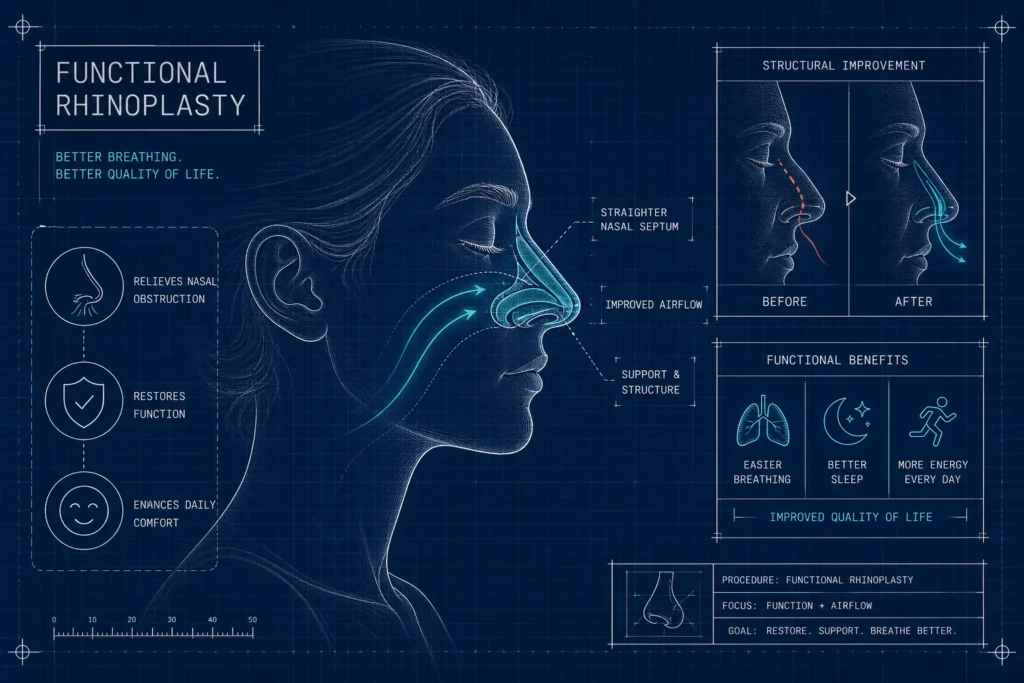
An ENT (otolaryngology) surgical background is a meaningful differentiator that goes beyond the certificate on the wall. ENT-trained rhinoplasty surgeons evaluate the full nasal airway, including the septum, turbinates, and nasal valves, before addressing the external shape. For a patient population with 85% septal deviation prevalence, that functional knowledge is essential. It allows a surgeon to address breathing problems and cosmetic concerns in a single procedure, eliminating the need for two separate surgeries and two recoveries.
Experience volume matters, though only when measured against a specific benchmark. Look for surgeons with at least 10 years of dedicated rhinoplasty practice and documented case volume specifically on Middle Eastern patients. Facility accreditation and hospital admitting privileges are non-negotiable. These credentials signal the surgeon can manage complications, not just perform the primary procedure.
If you’re searching beyond your immediate area, use the ABFPRS locator or ABPS verification tool as your starting point, then filter by surgeons whose published portfolios include Middle Eastern rhinoplasty cases. A rhinoplasty surgeon near me search is a reasonable first step, but geography should be a secondary consideration, specialty fit comes first.
How to read a before-and-after gallery like an expert
A portfolio is the clearest window into what a surgeon actually produces. Most patients look at these photos passively and react emotionally to results they find attractive. You need to evaluate the gallery as evidence of relevant technical capability.
Start with the “before” photos. Confirm the surgeon treats patients who share your specific anatomy: thick skin, prominent dorsal humps, bulbous or drooping tips, wide alar base. If the before gallery shows only thin-skinned anatomy, this surgeon has not demonstrated relevant experience regardless of how impressive the results look. The absence of Middle Eastern patients in a gallery is a significant red flag, and a strong reason to keep searching. For reference examples of properly documented Middle Eastern cases, review dedicated galleries such as the Middle Eastern rhinoplasty before-and-after gallery to see the angles and consistency you should expect.
In the “after” photos, look for natural contour rather than pinched or artificial refinement. Thick skin will always limit the level of dramatic definition achievable; a surgeon who promises otherwise is overselling. More importantly, the nose should look like it belongs on that patient’s face. Preserved ethnic identity isn’t a subjective bonus, it’s evidence that the surgeon understands the goal of this surgery. Look for consistency across multiple cases with similar anatomy. One excellent result could be luck. Ten consistent results across similar patients with comparable anatomy is skill.
Photo quality itself is a signal. High-resolution, unaltered side-by-side comparisons in consistent lighting are the standard for an honest portfolio. Heavily filtered images, inconsistent lighting, or galleries that show only frontal angles are warning signs. Oblique and lateral views are essential for honest assessment of dorsal profile and tip position. If a surgeon isn’t showing those angles, ask why.
Red flags that should stop your search immediately
Some red flags warrant ending a search immediately. Board certification from a non-ABMS-recognized body tops the list. If a surgeon’s primary credential comes from a “cosmetic surgery” board rather than ABPS or ABFPRS, move on regardless of how polished their website looks. Vague or evasive answers during consultation about technique, revision policy, or case volume are equally telling, they indicate a surgeon who is either inexperienced or uncomfortable with accountability.
Watch for language that frames ethnic features as problems to fix rather than characteristics to balance. Phrases like “westernize your profile” or comments that imply your heritage is the issue signal a surgeon who doesn’t understand the goal. Applying standard Caucasian rhinoplasty techniques to Middle Eastern anatomy is a well-documented clinical pattern associated with a disproportionate share of the revision cases that end up at specialist clinics. It’s not a theoretical concern.
On the business side, extremely low pricing with vague itemization and pressure to book before a thorough consultation has taken place are signs that a clinic optimizes for volume rather than outcomes. Legitimate specialists price transparently and encourage deliberate decision-making. They understand that a well-informed patient makes a better surgical partner.
Consultation questions that reveal true specialization
The consultation is your final vetting step, and the questions you ask matter as much as the answers you receive. Start with the direct ones: “How many ethnic rhinoplasties have you performed specifically on Middle Eastern patients, and can I see the relevant cases?” This single question separates surgeons who have read about this anatomy from those who have operated on it repeatedly.
Ask about technique specifics. Which approach will the surgeon use for your anatomy, open or closed, and why? Will you need cartilage grafts, and if so, what kind and where sourced? These questions reveal whether the surgeon has a customized plan or a default protocol applied to everyone. Ask directly how thick skin affects your expected results and what level of definition is realistically achievable. A surgeon who sets honest expectations is far safer than one who promises maximum definition regardless of skin type.
Two questions on cultural sensitivity are worth asking explicitly:
- “How will you ensure the changes fit my ethnic facial proportions rather than standardized Western measurements?”
- “Can I bring reference photos of noses I admire that reflect my background to guide our discussion?”
A surgeon who welcomes these questions understands the assignment. One who deflects them or pivots to generic aesthetic standards does not.
Finally, ask about accountability: what is the revision policy if the outcome doesn’t meet your expectations? And does the surgeon perform a functional nasal evaluation before surgery? For any patient with Middle Eastern anatomy, combining aesthetic refinement with breathing function assessment in a single consultation is the standard of care, not an add-on.
Why ENT expertise paired with cultural sensitivity changes everything
The ideal ethnic rhinoplasty specialist isn’t simply a nose reshaper. They’re a structural surgeon who understands function, form, and cultural identity as a unified challenge. This combination is what produces natural, lasting results on Middle Eastern anatomy, and it’s the professional profile worth seeking out during your search.
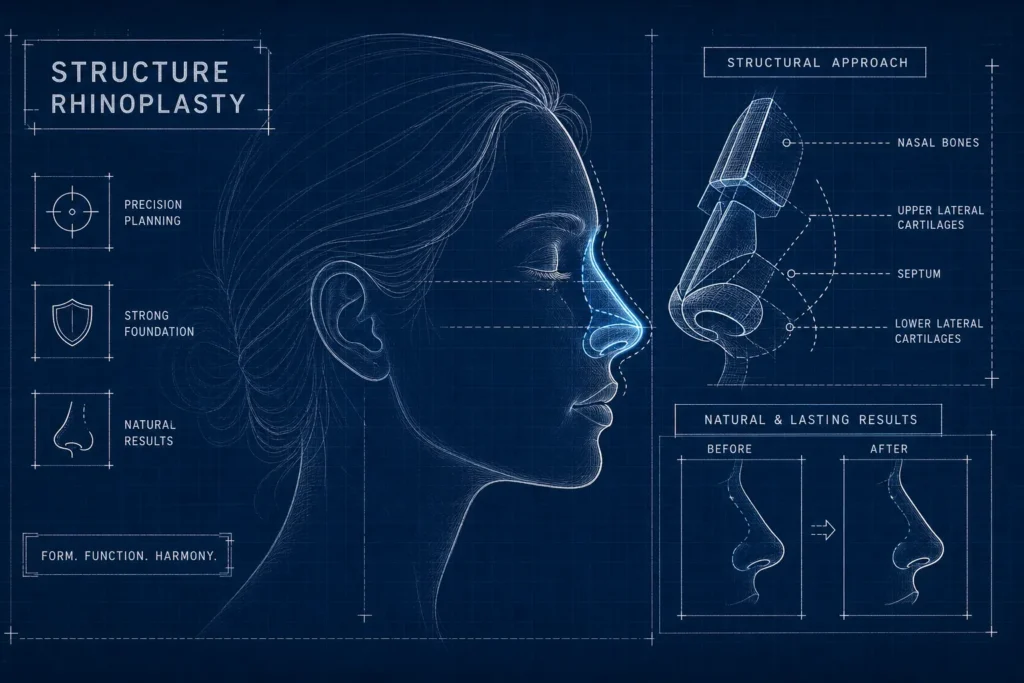
Dr. Ergün Kürün’s clinic in Adana, Turkey, illustrates what this approach looks like in practice. The clinic’s stated protocol begins with a full endoscopic nasal function evaluation before any cosmetic planning, which aligns with the clinical standard for a patient population where septal deviation prevalence is high. The practice uses a range of surgical approaches, including Preservation Rhinoplasty, Structure Rhinoplasty, and Ultrasonic (Piezo) Rhinoplasty, selected based on individual anatomy rather than a uniform protocol. Digital surgical planning that accounts for the patient’s complete facial proportions, rather than generic aesthetic templates, is part of that individualized process. For more on Dr. Kürün and his practice profile, see Dr. Ergün Kürün: Estetiğin Bilimle, Tecrübenin Sanatla Buluştuğu Nokta, 2026.
Boutique surgical environments matter in ethnic rhinoplasty more than in many other subspecialties. High-volume clinics that optimize for throughput tend to compress the individual anatomical planning that complex cases require. For Middle Eastern patients, where technique selection is highly anatomy-dependent and thick skin requires careful post-operative management, that compression produces inconsistent results. Many experts recommend prioritizing practices where individualized pre-surgical assessment and personalized post-operative protocols are standard, not exceptions.
Your path to the right surgeon starts with deliberate vetting
If you’ve been asking yourself how do I find a surgeon who specializes in ethnic rhinoplasty for Middle Eastern features, the framework above gives you a direct answer. Verify credentials against ABMS-recognized boards. Analyze before-and-after galleries specifically for Middle Eastern rhinoplasty cases and honest, consistent results. Ask pointed consultation questions about technique, case volume, and cultural sensitivity. Walk away from any surgeon who triggers the red flags outlined above.
For patients considering international options, ENT-trained specialists with specific experience in Middle Eastern rhinoplasty, such as Dr. Ergün Kürün in Adana, represent a benchmark that combines functional surgical knowledge, cultural understanding, and individualized planning. Costs at international clinics are often substantially lower than equivalent US providers, though the more important variable is always surgical fit and verified specialty experience. If you want to understand ABFPRS certification pathways while researching specialists, review the ABFPRS applying-for-certification information as part of your credential verification process.
Start with a consultation designed around your anatomy and your goals. Bring your questions. Bring reference photos. Pay close attention to how the surgeon responds. A surgeon who genuinely understands Middle Eastern rhinoplasty will welcome that scrutiny. That confidence is itself a signal.