Most people associate a nose job with one unavoidable aftermath: swollen eyes, deep bruising, and two weeks hiding indoors. That picture is accurate for traditional rhinoplasty, where a surgeon uses a chisel and mallet to physically fracture the nasal bones into a new position. Ultrasonic rhinoplasty challenges that assumption at the mechanical level, not just in marketing language.
The technique uses a piezoelectric handpiece that generates micro-oscillations in the near-ultrasonic frequency range to sculpt nasal bone with cellular-level precision. No hammer. No splintered fracture lines. The bone is reshaped rather than broken, and the surrounding blood vessels, nerves, and soft tissue are left largely untouched. The result is a dramatically cleaner early recovery with no compromise to the long-term outcome.
At boutique practices like Op. Dr. Ergün Kürün’s clinic in Adana, Turkey, piezoelectric rhinoplasty is standard protocol, not an upsell. Dr. Kürün is an ENT specialist with over 25 years of surgical experience, meaning the technique is integrated into a deep anatomical understanding of both nasal structure and airway function. By the end of this article, you’ll know exactly how the technology works, who it’s right for, what recovery looks like week by week, what it costs in the US versus abroad, and which questions reveal whether a surgeon truly knows the technique.
How a piezo device physically reshapes nasal bone
The physics are worth understanding because they explain every clinical advantage that follows. A piezoelectric device generates ultrasonic micro-oscillations at approximately 25,000 to 29,000 Hz. At that frequency, the vibrating tip contacts mineralized bone and causes microscopic shattering at the cellular level. This process is reinforced by cavitation: rapid pressure fluctuations in the irrigation fluid create and implode gas micro-bubbles, generating shockwaves that disintegrate bone and clear debris simultaneously. The cut is clean, with no radiating fracture lines extending beyond the target area.
The reason soft tissue stays untouched comes down to density and elasticity. Bone is rigid and mineralized, transmitting ultrasonic energy directly. Soft tissue, including skin, mucosa, small blood vessels, and nerves, is elastic. When the vibrating tip contacts it, the tissue oscillates at the same speed as the instrument rather than being sheared. Critically, the device operates below the 50 kHz threshold required to cut soft tissue, making the protection a physical property of the frequency rather than a matter of surgical precision alone. Blood vessels near the osteotomy site remain largely intact, which is the direct reason bruising is dramatically reduced in ultrasonic piezo osteotomy compared to traditional approaches.
One honest limitation: piezo technology works only on bone and hard cartilage. It cannot reshape the softer nasal cartilage that defines tip shape, and the technique requires an open rhinoplasty approach because the handpiece needs direct access to the bone surface. Patients whose primary goal is tip refinement gain no mechanical advantage from this technology. A surgeon who states that clearly upfront is one worth trusting.
Ultrasonic rhinoplasty vs. traditional rhinoplasty: what the data actually shows
Traditional osteotomy fractures nasal bone with a hammer and chisel, tearing small blood vessels in the process. Bruising typically peaks on days two and three and spreads under both eyes. Swelling is pronounced for the first two weeks, and when the splint comes off around day seven, the nose is still significantly puffy. With ultrasound rhinoplasty, bruising is reduced in up to 87.5% of randomized controlled trials comparing the two approaches, with statistically significant differences recorded on days two, four, and seven. External swelling shows measurable improvement as early as day two to three post-surgery. These findings are documented in peer-reviewed analyses of ultrasonic osteotomy techniques and clinical outcomes, which summarize the comparative evidence across randomized and observational studies (peer-reviewed systematic review).
Surgical precision is the other meaningful difference. A chisel fracture is directionally unpredictable; the fracture line can extend beyond the intended area, which is especially problematic in patients with thin or delicate nasal bones. Piezo tools allow millimeter-level sculpting under direct vision, letting a surgeon narrow or smooth the nasal bridge in incremental steps rather than committing to a single fracture event. That control matters enormously in revision rhinoplasty cases and in ethnic rhinoplasty where subtle, graduated changes are the goal.
On revision rates, the honest answer is that no large-scale peer-reviewed comparative trial currently exists. The most reliable benchmarks come from traditional rhinoplasty literature: approximately 2.73% reoperation rate for open rhinoplasty and 1.56% for closed. Published outcomes from early-adopter clinics suggest ultrasonic rhinoplasty may carry a slightly higher revision rate during a surgeon’s learning curve, declining significantly with case volume and experience. That is not a reason to avoid the technique; it is a reason to prioritize surgeon experience above everything else when choosing a provider.
Who is the right candidate for piezo rhinoplasty
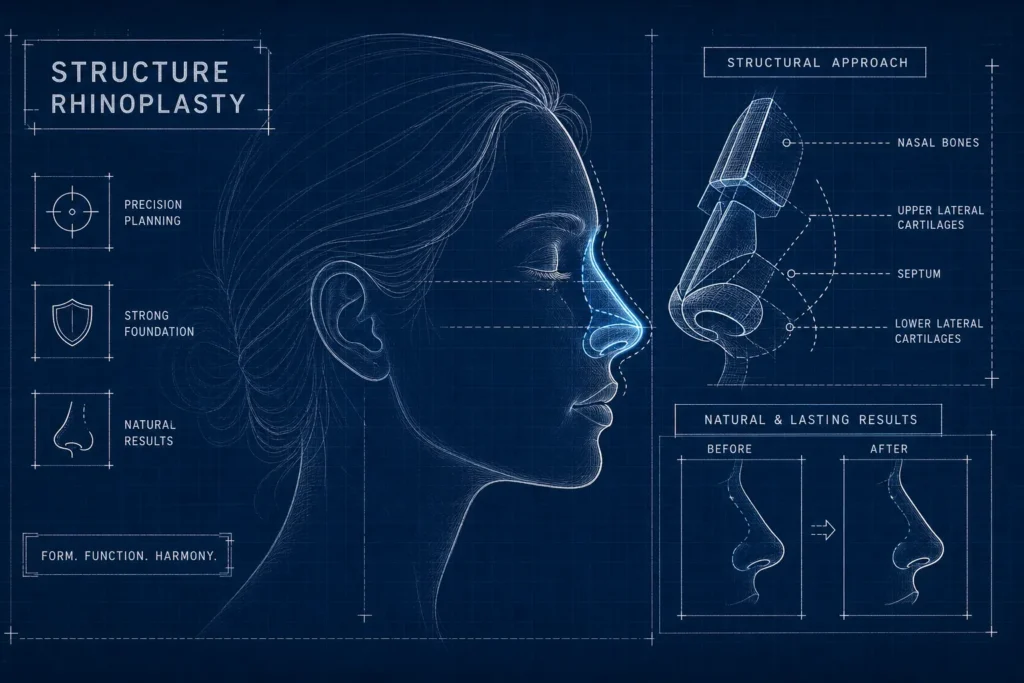
Patients seeking dorsal hump reduction or nasal bridge narrowing are the strongest candidates, since these are bone-level changes where piezoelectric precision excels. Wide or thick nasal bones respond especially well, the technology was designed for exactly that anatomy. Patients whose goal is preservation rhinoplasty, retaining as much native tissue as possible, are also well-suited because piezo reshaping avoids the complete bone fracture that traditional osteotomy requires. Middle Eastern rhinoplasty: Finding the Right Specialist patients who want subtle, culturally respectful refinement benefit from the precision control, particularly when the target is a natural result rather than a dramatic transformation.
Thicker nasal skin is not a disqualifier, but it does extend the timeline for the final result to become visible. Thicker skin takes longer to reveal the refined underlying framework. The reduced early swelling from piezo technique actually helps here: less initial trauma means less compounding puffiness on top of skin that already takes time to settle.
Closed rhinoplasty candidates and patients whose primary concerns are cartilage-based, tip projection, tip rotation, or alar reshaping, won’t gain any advantage from the piezo device. The handpiece requires open surgical access, and cartilage is outside its operating scope. Understanding this helps you self-qualify before investing time and money in consultations with surgeons who may oversell the technique regardless of your actual anatomy.
What ultrasonic rhinoplasty recovery actually looks like, week by week
Days 1, 7: the early phase
In the first 24 hours, swelling peaks and then begins declining by day two to three. For many piezo rhinoplasty patients, bruising is absent entirely or limited to a small localized area rather than spreading under both eyes. Most patients describe this phase as feeling like a moderate head cold: congestion, mild pressure, no acute pain. The external nasal splint stays on for six to eight days depending on the surgeon’s protocol, and most patients see a notably cleaner result at removal compared to traditional rhinoplasty patients at the same stage.
Weeks 2, 4: returning to daily life
Social readiness varies by individual, but many piezo patients feel comfortable in public by day seven. Traditional rhinoplasty patients typically need ten to fourteen days before residual bruising and swelling allow a normal return to visibility. For international patients traveling from the United States, this timeline matters considerably. Op. Dr. Kürün’s clinic follows a 7-day social recovery protocol specifically designed for patients who need to return home within a week of splint removal, a window that aligns directly with what piezo surgery enables clinically.
Light work, walking, and most daily activity resumes by the end of week one into week two. Strenuous exercise, contact sports, and anything risking impact to the nose stays off the table for four to six weeks. Nasal blowing should be avoided for four weeks. For flying: medically, travel is safe the day after surgery for patients who need it, though most surgeons recommend waiting until splint removal around day eight for optimal comfort. A short-acting nasal decongestant spray used twenty minutes before boarding reduces congestion-related pressure during the flight.
Approximately 80% of swelling resolves within the first month for both ultrasonic nose reshaping and traditional rhinoplasty patients. The final contour, including subtle tissue remodeling beneath the skin, takes six to twelve months to fully emerge. The advantages of the piezo technique are concentrated in the first two weeks; it does not accelerate the deep tissue healing that determines the final aesthetic result.
What ultrasonic rhinoplasty costs, and why the US-to-Turkey gap is so large
All-inclusive primary cases in the United States typically start around $15,500 in mid-tier markets like Dallas and Fort Worth and climb to $26,000, $32,000 in high-demand cities like Boston, New York, and Los Angeles. Three variables drive that range: surgeon reputation and specialization, geographic overhead, and procedure complexity. The piezo premium over traditional rhinoplasty runs approximately $3,000 to $10,000 because the specialized handpieces, ultrasonic generators, and training required represent real overhead costs passed on to patients.
In Turkey, ultrasonic nose reshaping at a credentialed specialist clinic runs approximately $4,000 to $6,000 all-inclusive, a 60 to 75% cost reduction versus equivalent US procedures. At Op. Dr. Ergün Kürün’s boutique clinic in Adana, that price covers surgery by an ENT-trained rhinoplasty specialist, digital pre-surgical planning using golden ratio facial analysis, post-operative care, and a structured follow-up protocol. Unlike high-volume Turkish surgical centers that process patients with standardized approaches, the clinic operates as a boutique practice where every surgical plan is built around the individual patient’s facial anatomy. For a focused comparison of pricing, safety, and outcomes between the two markets, see Nose Job Turkey vs. USA: 2026 Costs, Safety, and Outcomes, Adana Burun Estetiği.
American patients of Turkish, Middle Eastern, Persian, and South Asian backgrounds increasingly choose Adana for ethnic rhinoplasty because Dr. Kürün’s track record demonstrates natural, culturally sensitive results that preserve facial identity rather than imposing a generic aesthetic. A legitimate all-inclusive quote, whether in the US or abroad, should cover the surgeon’s fee, anesthesia, accredited facility costs, post-operative splint and care visits, and at least one follow-up consultation. Red flags include quotes that separate out anesthesia or facility fees, which can add $3,000 to $5,000 in the United States. International patients should ask explicitly whether teleconsultation before surgery and remote follow-up after returning home are included.
Choosing the right surgeon: credentials and questions that matter
Board certification in facial plastic surgery combined with ENT (otolaryngology) training is the strongest credential for piezo rhinoplasty because it guarantees anatomical knowledge of both nasal structure and airway function simultaneously. A general plastic surgeon may be highly skilled, but an ENT-trained rhinoplasty specialist understands how bone reshaping interacts with nasal valve function, breathing mechanics, and long-term structural stability. For the piezo technique specifically, confirm the surgeon has performed hundreds of ultrasonic cases, not a handful, and ask directly about their revision rate for this specific technique. It also helps to verify familiarity with industry-standard piezoelectric bone surgery systems and approved device platforms (piezoelectric bone surgery system overview).
When reviewing before-and-after galleries, request results from piezo rhinoplasty cases specifically, not general rhinoplasty, and look for 3D imaging or digital planning images that show intended versus achieved outcomes. Evaluate patients whose starting anatomy resembles yours: similar skin thickness, ethnic background, and degree of dorsal hump or bridge width. The gallery tells you far more than any marketing claim.
Six questions worth asking at your consultation:
- How many ultrasonic rhinoplasty procedures have you performed, and what is your revision rate for this specific technique?
- Do you use the piezo device in every open case, or selectively based on anatomy?
- Given my anatomy, are there any goals I’ve described that would require traditional bone work instead?
- What does your all-inclusive pricing cover, and what would cause that number to change after surgery?
- For international patients: what is your teleconsultation process before travel, and what post-operative support do you provide after I return home?
- Is ultrasonic rhinoplasty less painful than traditional rhinoplasty, and what pain management protocol do you use?
The bottom line on piezo rhinoplasty
Ultrasonic rhinoplasty delivers real, documented clinical advantages: precision bone sculpting, significantly less bruising, faster social recovery, and a cleaner result visible earlier in the healing process. These are not marketing claims; they are supported by peer-reviewed systematic reviews (Oxford Academic review of ultrasonic rhinoplasty outcomes). The long-term healing timeline remains similar to traditional rhinoplasty because deep tissue remodeling operates on its own biological schedule regardless of technique.
The technique is only as good as the surgeon performing it, and case volume matters enormously with piezo surgery. A surgeon who has performed thousands of traditional rhinoplasties and added the piezo handpiece as a novelty tool is a fundamentally different proposition than a specialist who has integrated the technique into hundreds of dedicated cases with documented outcomes.
If the cost of US ultrasonic rhinoplasty is a barrier, or if you want a consultation with a specialist who has spent 25+ years performing ENT and aesthetic nasal surgery across the full spectrum of advanced techniques, including preservation rhinoplasty, structural approaches, and piezo rhinoplasty, Is Rhinoplasty in Turkey Worth It for American Patients?, Adana Burun Estetiği a teleconsultation with Dr. Ergün Kürün’s clinic in Adana is a practical starting point. The clinic’s boutique model, combined with Dr. Kürün’s depth of experience, offers surgical expertise and individualized care at a fraction of the US price, with a recovery protocol built around getting you home quickly and confidently.